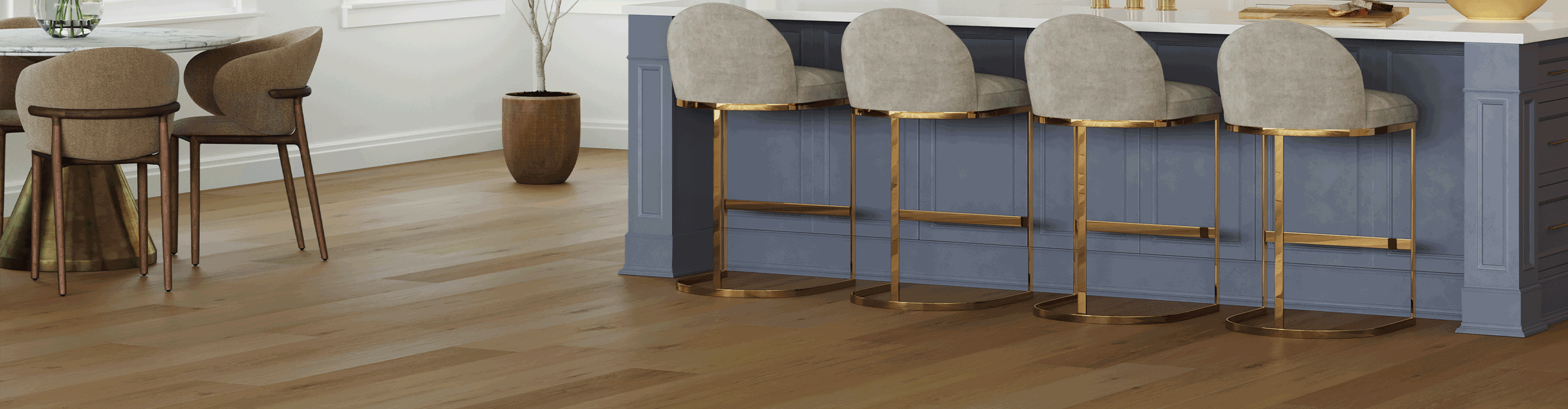
Choosing between vinyl and laminate flooring comes down to one big question: what will your floor face? Both are durable, stylish, and budget-friendly, but they handle real life a little differently. Here's what to know before you decide.
Laminate flooring is a popular choice for homeowners who want the warm look of hardwood with the added benefits of low-maintenance. It's built in layers, with a tough top coating, a high-definition wood-grain image layer, and a sturdy core made from high-density fiberboard (HDF).
That construction gives laminate impressive durability. The wear layer resists scratches, scuffs, and daily wear, making it a great fit for busy households. Laminate can also be installed as a floating floor, which means the planks click together over the subfloor without glue or nails.
Modern laminate flooring looks more realistic than ever, with textured surfaces that capture the grain and feel of natural wood. It's a confident choice for anyone who loves the timeless beauty of hardwood and wants a floor that holds up to everyday life.
Vinyl flooring is a water-resistant flooring popular for its versatility and resilience, with many waterproof options available. Today's luxury vinyl comes in two main forms: luxury vinyl plank (LVP), which mimics hardwood, and luxury vinyl tile (LVT), which recreates the look of stone and ceramic.
What makes vinyl stand out is its construction. A rigid core resists denting and flexing, a high-definition design layer delivers realistic style, and a protective wear layer guards against scratches and moisture. The result is a floor built to handle spills, splashes, and high traffic with ease.
100% waterproof vinyl flooring options work beautifully in spaces where other floors struggle. Kitchens, bathrooms, basements, and laundry rooms all benefit from vinyl's moisture resistance, while its softer, warmer feel underfoot adds everyday comfort.
When comparing laminate and vinyl, a few core differences shape the decision. Understanding them helps you match the right floor to the right room.
Durability: Both floors are built to last. Laminate offers excellent scratch resistance thanks to its hard wear layer, while vinyl excels at standing up to moisture and impact without cracking.
Water resistance: This is the biggest difference. Vinyl is more water-resistant, making it ideal for wet areas. Laminate is also water-resistant, but standing water can damage its core over time.
Comfort and feel: Vinyl tends to feel softer and warmer underfoot, while laminate offers a firmer step with a textured, wood-like surface.
Aesthetics: Both deliver stunning, realistic visuals. Laminate leans into authentic wood looks, while vinyl offers wood and stone styles with added moisture protection.
Maintenance: Both are easy to care for with regular sweeping and occasional damp cleaning. Just be mindful of excess water on laminate floors.
Luxury vinyl plank (LVP) and laminate are two of the most popular wood-look flooring options, and they're often compared side by side. Both deliver the appearance of hardwood in plank form, but they perform differently depending on your space.
LVP is often made with a waterproof vinyl core, so it shrugs off spills, splashes, and humidity. That makes it the go-to choice for moisture-prone rooms. Laminate, on the other hand, uses an HDF core that's water-resistant but not waterproof, so prolonged moisture can cause the core to swell.
Here's the nuance many homeowners miss: in dry conditions, laminate often outperforms LVP on scratch resistance. Its hard surface stands up exceptionally well to scuffs and abrasion. So the right choice really depends on the room and how your household lives.
Ready to see your future floor? Stop imagining and start visualizing. Our Room Visualizer tool lets you see your favorite flooring styles in your very own room in just three simple steps. Take a photo, select a floor, and prepare to be amazed.
Don't just guess. See the perfect floor in your home today and make your decision with absolute confidence.
Luxury vinyl tile (LVT) brings a different style to the conversation. While LVP mimics hardwood planks, LVT recreates the look of stone, ceramic, and tile formats, making it perfect for homeowners who love a high-end tile aesthetic with easier upkeep.
Like LVP, LVT comes in fully waterproof options, making it an excellent fit for wet rooms. Compared to laminate, LVT wins in spaces where you want a stone or tile appearance combined with reliable moisture protection. It's softer and warmer underfoot than hard materials like natural tile.
Laminate still competes well in dry areas where a wood look is the priority. But when your design vision calls for tile-inspired style in a moisture-prone space, LVT is the clear standout. Browse shop LVT flooring to find your perfect match.
The best flooring choice often depends on the room. Here's a quick room-by-room guide to help you decide with confidence.
Vinyl flooring can be a better choice for kitchens. Spills, splashes, and moisture around the sink and dishwasher make waterproof flooring a smart investment. Vinyl handles it all while keeping your space stylish.
For full bathrooms, vinyl (LVP or LVT) is the only recommendation. Consistent humidity and standing water make laminate a risky choice here. Vinyl's waterproof construction keeps your bathroom floor protected for the long haul. Explore the waterproof flooring guide for inspiration.
Vinyl floors win in basements. Concrete subfloors can release moisture from below, and laminate's wood-based core is high-risk below grade. Vinyl's waterproof performance makes it the dependable pick for finished basements.
Laminate is a strong choice for living rooms and bedrooms. These dry spaces let laminate shine with its comfort, realistic wood texture, and excellent scratch resistance. It's a refined, cozy option for the rooms where you relax.
For households with pets, the right choice depends on your biggest concern. Choose luxury vinyl if moisture accidents are likely, since its waterproof surface handles them with ease. Choose laminate if scratching is your main worry and moisture is well controlled, since its hard wear layer resists claw marks beautifully.
Still deciding? Use this quick guide to find your best fit.
Most vinyl flooring has a waterproof core, while laminate uses a water-resistant HDF core. Both mimic the look of hardwood, but vinyl excels in moisture-prone areas, and laminate offers excellent scratch resistance in dry spaces. The right choice depends on the room and your lifestyle.
Both can last many years with proper care. Vinyl tends to hold up better in moisture-prone and high-traffic areas, while laminate performs exceptionally well in dry rooms where scratch resistance matters. Longevity often comes down to matching the floor to the right space.
Both handle traffic well. Vinyl is a great all-around performer, especially where moisture is present, while laminate's hard wear layer makes it highly scratch-resistant in dry, busy rooms. Consider the room's moisture level to make the best call.
Both are budget-friendly options, and many products install as floating floors, which helps keep installation straightforward. Final costs depend on the specific product, room size, and subfloor condition. Professional installation ensures the best long-term results.
Both are easy to care for. Sweep or vacuum regularly to remove dirt, and clean with a damp mop using manufacturer-approved products. With laminate, avoid excess water and wipe up spills quickly to protect the core.
Start with the room. Choose vinyl for moisture-prone spaces like kitchens, bathrooms, and basements. Choose laminate for dry rooms where comfort, wood texture, and scratch resistance are priorities. Your household needs, like pets and kids, will help guide the final decision.
It depends on the room. LVP is better for moisture-prone spaces like kitchens, bathrooms, and basements because it's fully waterproof. Laminate often wins on scratch resistance in dry conditions, making it ideal for bedrooms and living rooms. The best choice comes down to your specific space and lifestyle.
LVP has a waterproof vinyl core, while laminate has a water-resistant HDF core that can swell with prolonged moisture exposure. Both mimic the appearance of hardwood, but they perform differently depending on the room's moisture level.
LVT is the better choice for wet rooms where you want a stone or tile look, since it's fully waterproof. Laminate wins in dry spaces where a realistic wood appearance and warm comfort are the priority. The right pick depends on your style and the room.
Vinyl is more waterproof. Both LVP and LVT are fully waterproof, while laminate is water-resistant but not waterproof, its HDF core can swell with sustained moisture exposure.
LVP is the default recommendation for households with dogs, because its waterproof surface handles accidents with ease. Laminate with a high wear rating handles scratches well in dry conditions, but it's more vulnerable to pet accidents near seams. For most dog owners, LVP offers greater peace of mind.
Neither is universally better; it depends on the room. Vinyl wins for wet spaces and moisture-prone households, while laminate wins for dry rooms where wood texture and scratch resistance are priorities. Match the floor to the space, and you'll love the results.
Both vinyl and laminate can transform your home with beautiful, durable flooring built for real life. The secret is matching the right floor to the right room: vinyl for moisture-prone spaces, laminate for dry rooms where comfort and scratch resistance shine.
Once your new floors are in, a little ongoing care goes a long way. Sweep regularly, clean up spills promptly, and follow your manufacturer's guidelines to keep your floors looking stunning for years to come. With the right choice and consistent upkeep, your floors will reward you with lasting beauty and dependable performance season after season.
Thank you for contacting Carpet One Floor & Home. Your local flooring expert will reach out to you regarding your inquiry.